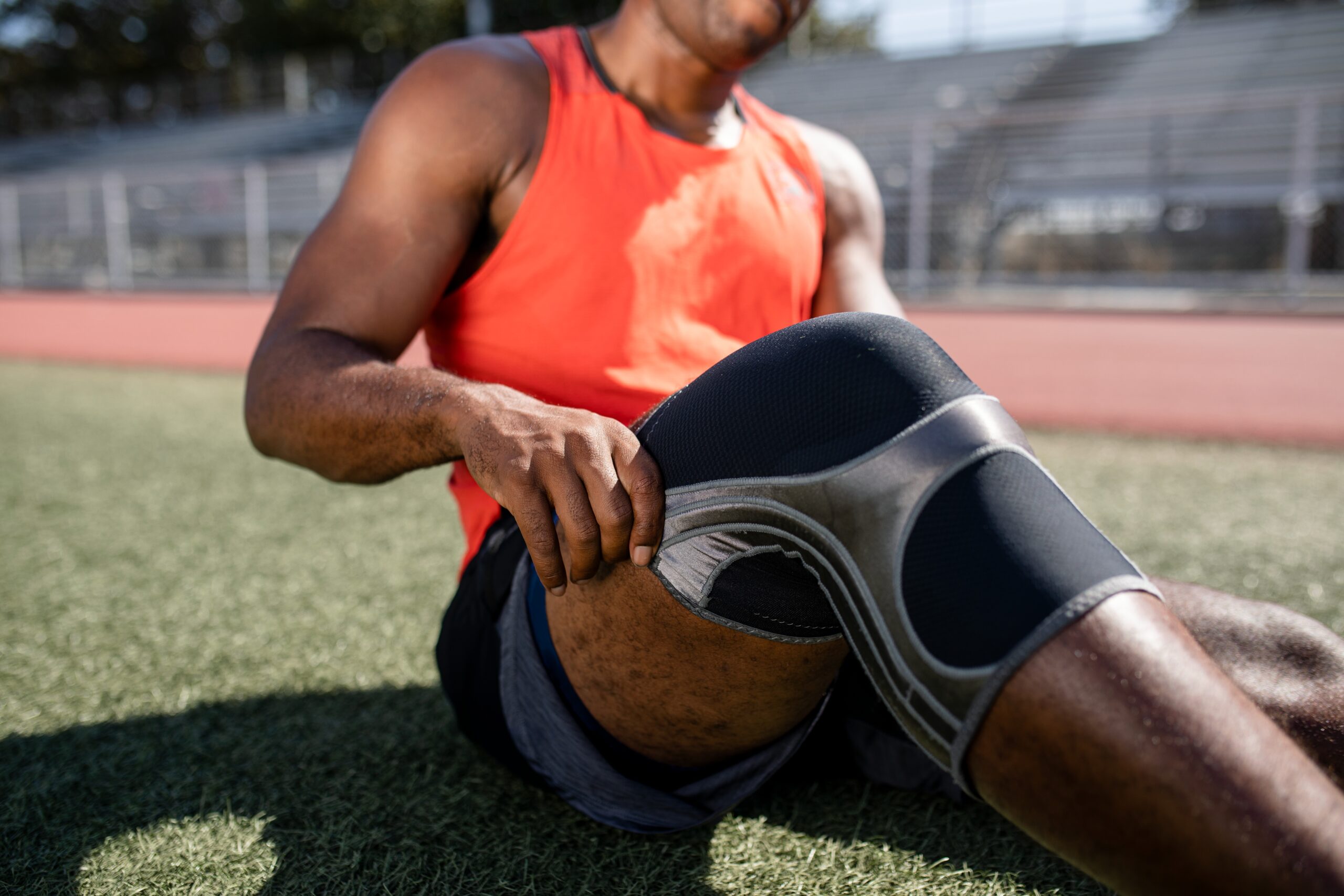
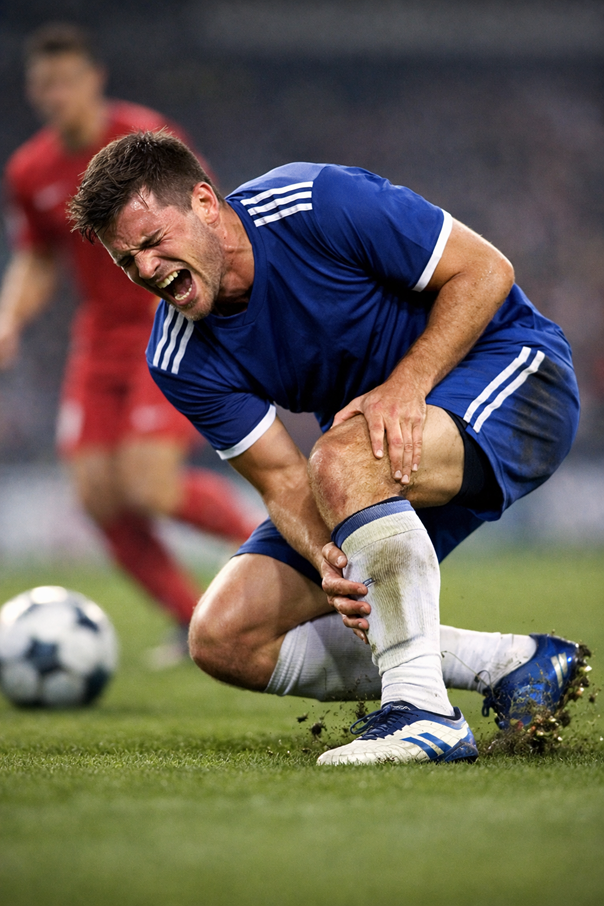
A rupture of the anterior cruciate ligament (ACL) is one of the most common severe knee injuries in sport. This injury occurs particularly often in stop-and-go sports such as football, skiing or handball. The anterior cruciate ligament has the essential task of stabilising the knee joint, especially during rotational movements and rapid changes of direction. If an ACL rupture is not treated correctly, it can lead to permanent instability, further meniscal damage and, in the long term, even premature joint wear (osteoarthritis).
Symptoms: how do you recognise an ACL rupture?
When the cruciate ligament tears, it usually makes itself felt immediately. Typical symptoms include:
- A sudden “popping” or tearing sensation in the knee
- Severe, acutely occurring pain
- Rapid swelling of the knee joint
- A distinct feeling of instability
- Insecurity during twisting movements
In addition, many patients report that the affected knee literally “gives way” during sporting activity or even in everyday life – in medicine this is known as the giving-way phenomenon.
Diagnosis
To establish the injury beyond doubt, the diagnosis is made through a thorough clinical examination. The physician performs specific stability tests (such as the Lachman test) to check the play of the lower leg. In addition, imaging procedures such as MRI (magnetic resonance imaging) and X-rays are used. This precise analysis is absolutely necessary because, in more than half of all cases, concomitant injuries such as meniscal tears, collateral ligament damage or cartilage injuries are present alongside the torn ligament.
Conservative vs. surgical treatment
The choice of the right therapy is highly individual and depends largely on the patient’s age, the level of sporting activity and the degree of subjective instability.
Conservative treatment (without surgery) is often suitable for less active people or those who do not perform knee-straining twisting movements in everyday life and sport. The focus here is on targeted and intensive muscle-strengthening training. Strengthened thigh muscles can stabilise the knee joint muscularly and partially compensate for the function of the missing cruciate ligament.
For athletically very active patients who want to return to their original sports, surgical ACL reconstruction is usually recommended instead. A torn cruciate ligament does not usually heal on its own. The injured ligament is therefore replaced with the body’s own graft in a minimally invasive procedure. In most cases, the surgeon removes a piece of the hamstring tendon (semitendinosus tendon) or the patellar tendon and anchors it in the knee joint to restore full mechanical stability.
Rehabilitation and prevention
Regardless of whether you decide for or against surgery, consistent physiotherapy is by far the most important key to treatment success. Rehabilitation after an ACL rupture requires a great deal of stamina and patience. After surgery, it usually takes nine to twelve months until full, unrestricted fitness for contact sports is regained. In the first weeks, the focus is on reducing swelling and regaining mobility, before strength, coordination and sport-specific movements are gradually trained.
To prevent an ACL rupture from the outset or to protect the healthy knee, sports physicians recommend a targeted warm-up programme. Proprioceptive training in particular – balance and coordination exercises on unstable surfaces – helps to train the reflexes of the knee muscles and effectively prevent injuries.
Frequently asked questions about ACL rupture
Typical signs are a sudden “popping” in the knee, severe acute pain, rapid swelling of the knee joint and a distinct feeling of instability. Many patients also report that the knee literally gives way under load (giving-way phenomenon).
Usually not. In athletically active patients, the torn ligament is therefore usually replaced minimally invasively with the body’s own tendon graft; less active people can often compensate for the missing stability through targeted muscle strengthening.
No. The choice of therapy depends on age, the level of sporting activity and the degree of instability. Conservative treatment with intensive muscle-strengthening training is often suitable for less active people without knee-straining twisting movements.
After surgery, it usually takes nine to twelve months until full, unrestricted fitness for contact sports is regained. The initial focus is on reducing swelling and regaining mobility, followed by strength, coordination and sport-specific training.
Sports physicians recommend a targeted warm-up programme and proprioceptive training: balance and coordination exercises on unstable surfaces train the reflexes of the knee muscles and help to effectively prevent injuries.