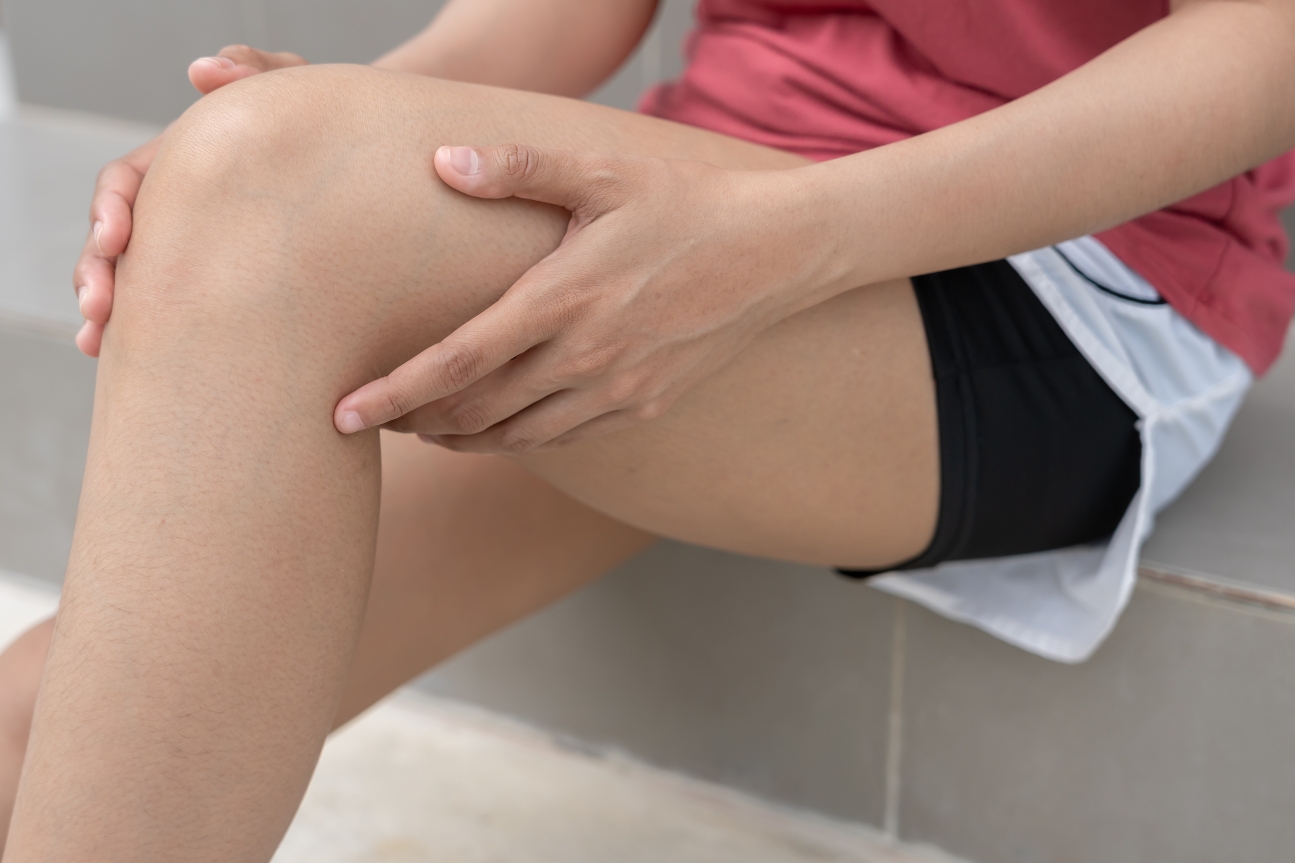
Many people know the unsettling feeling of the knee suddenly giving in, feeling unstable or losing its hold. This problem, in which the knee literally “buckles”, is known in medicine as knee instability (or the giving-way phenomenon). The cause of this buckling usually lies in an injury to or weakness of the structures that normally secure and stabilise the knee joint.
Symptoms of knee instability
The complaints can severely restrict everyday life and leisure activities. Typical symptoms include:
- The sudden feeling of the knee giving way
- A noticeable insecurity when walking normally or climbing stairs
- Pain under load or during twisting movements
- Clearly restricted sporting activity and performance
Causes of an unstable knee
Frequent triggers of this instability are structural damage within the joint. These primarily include injuries to the main stabilisers, such as an ACL rupture or an injury to the medial collateral ligament. Damage to the posterolateral complex (the outer and posterior ligament structures of the knee) as well as meniscal tears or cartilage injuries can also massively disturb the mechanics and stability of the joint. Combined ligament injuries are particularly treacherous: if they are not recognised or are inadequately treated, they almost always lead to chronic instability of the knee joint, which increases the risk of premature joint wear.

Diagnostics: getting to the root of the problem
To determine the exact cause of the instability, a thorough medical evaluation is essential. It always begins with a comprehensive clinical examination, in which the physician applies special manual stability tests to specifically assess the condition and firmness of the individual ligaments. For further confirmation and detailed visualisation of the joint structures, imaging procedures such as X-rays and, in particular, magnetic resonance imaging (MRI) are used. A precise diagnosis is extremely important, as several ligament structures are often affected simultaneously in complex trauma.
Treatment options
Treatment is always precisely tailored to the underlying cause, the extent of the injury and the patient's activity level. In milder instabilities, conservative treatment is often the first choice: targeted physiotherapeutic muscle strengthening and intensive neuromuscular stabilisation training help to improve the muscular control of the knee and relieve the ligaments.
If conservative treatment is not sufficient or severe tears are present, surgical ligament reconstruction is often the best way to make the joint resilient again. In particularly severe, complex injury patterns – when several ligaments are torn at once – a so-called multiligament reconstruction may even be required. In this demanding procedure, several ligament structures are surgically restored to give the knee back its full function and security.
Frequently asked questions about knee instability
Giving way describes the sudden, uncontrolled buckling of the knee joint under load or during twisting movements. It is the key symptom of knee instability and usually indicates an injury to or weakness of the stabilising ligament structures.
Yes. Even painless instability damages the joint: every buckling episode can further injure the meniscus and cartilage and increases the risk of premature joint wear. A medical evaluation is therefore advisable even without severe pain.
Often yes, in milder cases: targeted physiotherapeutic muscle strengthening and neuromuscular stabilisation training improve the muscular control of the knee and relieve the ligaments. The decisive factors are the cause, the extent of the injury and the patient’s activity level.
When conservative treatment is not sufficient, severe ligament tears are present or several ligaments are affected. Surgical ligament reconstruction – or, in complex injury patterns, multiligament reconstruction – then restores the stability and load-bearing capacity of the joint.
Unrecognised or inadequately treated combined ligament injuries almost always lead to chronic instability of the knee joint and considerably increase the risk of premature osteoarthritis.
It depends on the procedure. After an isolated ligament reconstruction, several months of structured rehabilitation are required; a return to contact sports is usually possible after about 8–12 months. Rehabilitation after multiligament reconstruction can take longer.